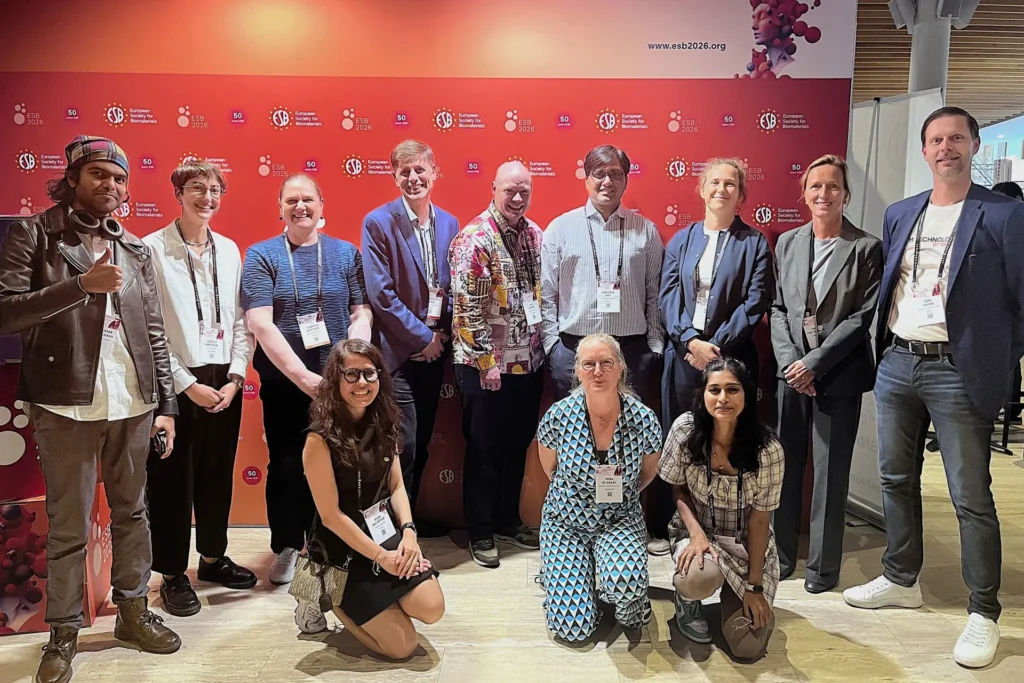
The STRONG-UR team came together at the 35th Annual Conference of the European Society for Biomaterials (ESB 2026) in Antwerp to share the latest advances in urethral tissue engineering.
The conference provided a unique platform to showcase how expertise in biomaterials, biofabrication, cell biology and clinical sciences is being integrated to develop next-generation solutions for urethral reconstruction.
A strong contribution from consortium partners was visible throughout the meeting. Sandra Van Vlierberghe and Nele Pien from Ghent University played an important role in the organisation of the conference, while researchers from across the consortium contributed scientific presentations, a dedicated symposium and industrial outreach activities.
During the event, the STRONG-UR research team presented work spanning tissue characterisation, biomaterials, 3D bioprinting, organoid models and clinical translation. The consortium’s active participation included oral and poster presentations, the organisation of a thematic symposium, and engagement with attendees through an exhibition stand hosted by project partners BRINTER and AdBioink.
The main highlights of the STRONG-UR team’s participation are:
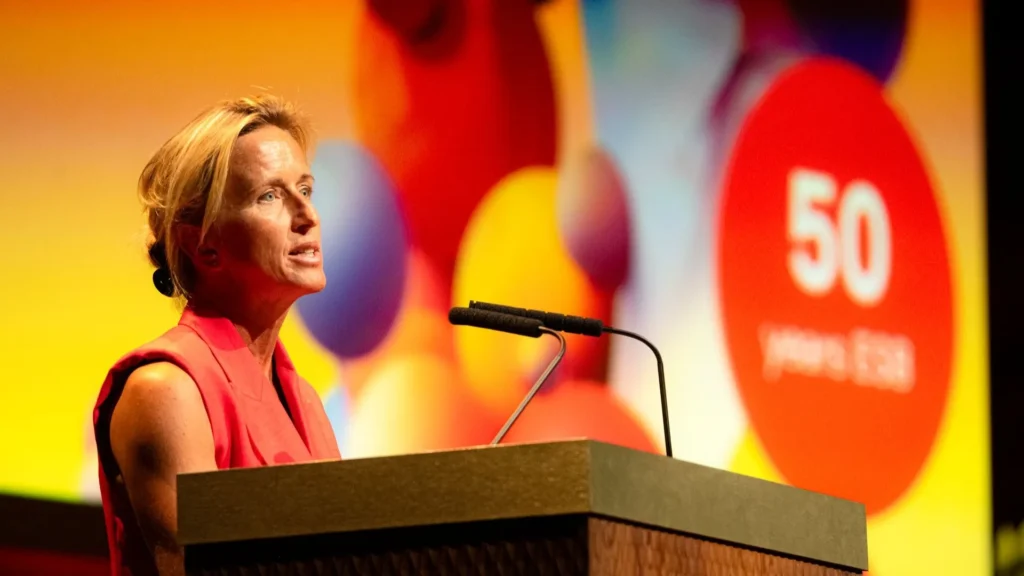
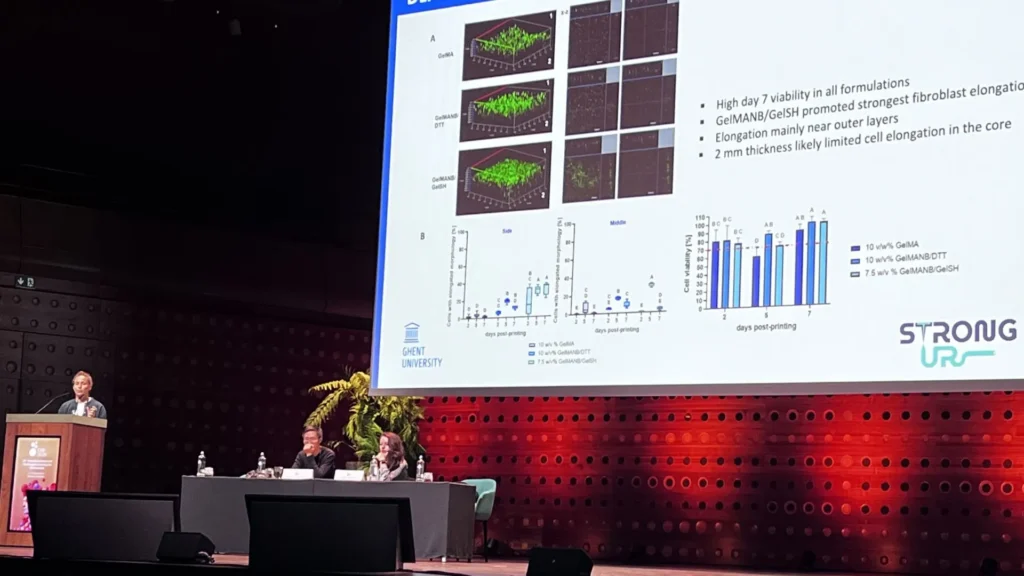
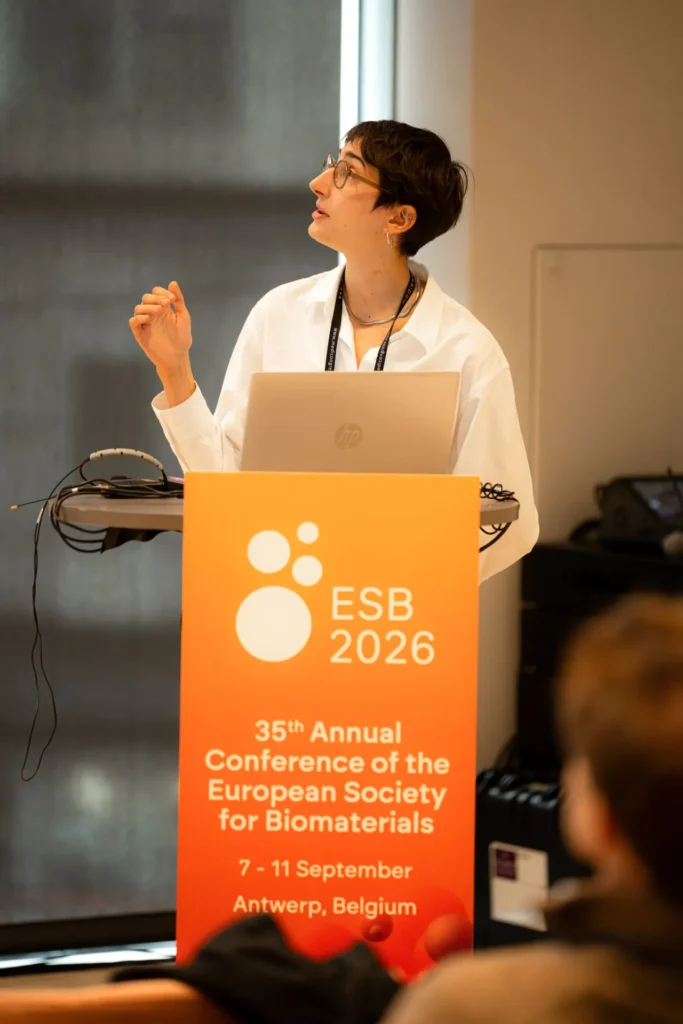
Nele Pien from Ghent University delivered a keynote talk entitled “Light-based 3D-printing of tunable photo-crosslinkable gelatins for urethral repair”. Nele explained the use of light-based biofabrication with several functionalised gelatin systems, including GelMA, GelNB/GelSH and GelMANB. The presentation highlighted that these formulations exhibit tuneable physicochemical and mechanical properties, while selected systems enable the fabrication of stable 3D and tubular constructs using volumetric additive manufacturing and digital light processing.
Amitha Shajahan from Aalborg University presented the poster “Engineering bioinks for urethral tissue engineering through a tissue-informed approach”. In her work, Amitha focuses on developing bioinks based on detailed biomechanical and histological characterisation of healthy urethral tissue.
The study reveals that native urethral tissue displays heterogeneous mechanical properties, providing important information for the design of hydrogels that more closely reproduce the characteristics of the target tissue.
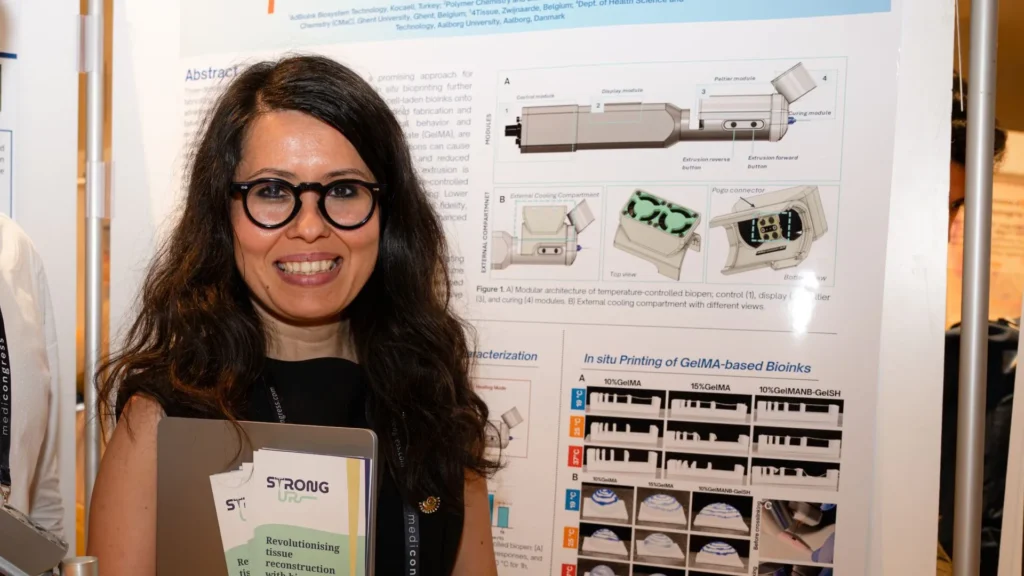
Ayça Bal Özturk from AdBioink presented the poster “Engineering a Temperature-Controlled Handheld Bioprinter for Urethral Tissue Regeneration Using Thermosensitive Bioinks”. Her work focuses on developing a handheld bioprinting device designed specifically to meet the requirements of the STRONG-UR project. The device enables controlled deposition of thermosensitive bioinks under clinically relevant conditions, supporting the fabrication of tissue-engineered constructs directly at the point of care.
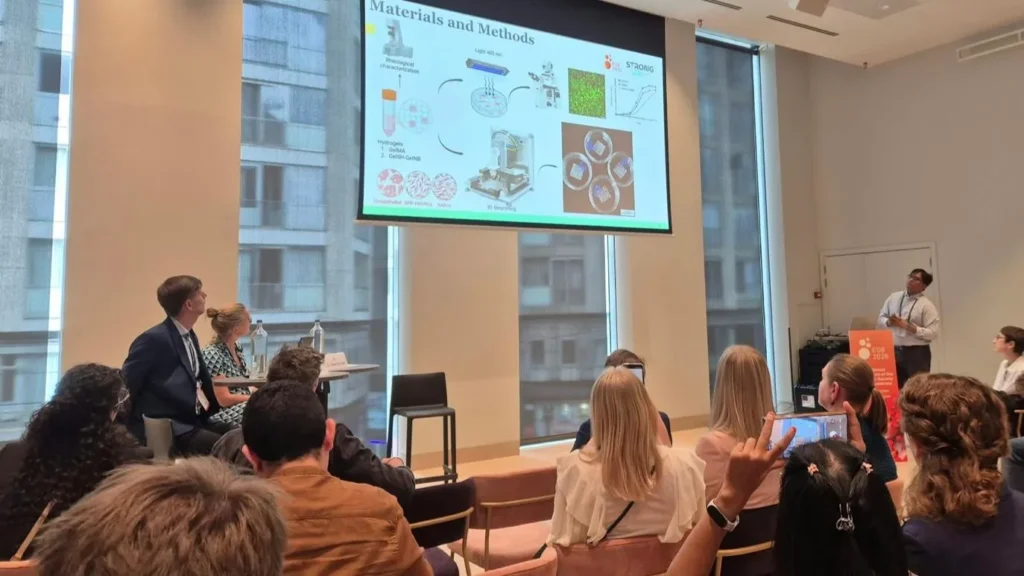
The consortium organised the symposium “Engineering Functional Tubular Tissues: From Urethral Reconstruction to Vascularised Biofabricated Grafts”, chaired by project coordinator Pablo Pennisi from Aalborg University and Petra de Graaf from University Medical Center Utrecht.
The first keynote talk was delivered by Petra de Graaf, titled “Clinical perspective on tissue engineering for urethral reconstructive surgery”. Her presentation addressed the clinical need for the STRONG-UR project as well as the requirements that must be considered as engineered solutions move towards application in urethral reconstructive surgery.
The second keynote talk was delivered by Susanna Miettinen from Tampere University, entitled “Coordinated epithelial-stromal regeneration for urethral repair using advanced polymeric scaffolds”. The talk emphasised that successful urethral regeneration requires more than scaffold design alone, highlighting the importance of using appropriate cellular material which, in combination with advanced polymeric biomaterials, can drive the development of clinically relevant tissue-engineered constructs.
The symposium hosted three oral presenters from the STRONG-UR consortium:
Jayson Sueters from University Medical Center Utrecht presented “From donor tissue to graft: decellularisation of human urethra for organ-specific reconstruction”. Although the work was initiated at a previous affiliation, it addresses one of the central challenges tackled within STRONG-UR: the development of biomimetic grafts capable of supporting functional urethral regeneration.
Isabelle Martinier from University Medical Center Utrecht presented “Matrix architecture governs urethral organoid fate: phenotypic responses across soft, stiff, and porous collagen type I substrates”. Isabelle explored how the physical properties and architecture of the extracellular matrix influence urethral organoid behaviour. By using biomimetic collagen type I substrates with different concentrations, stiffnesses and architectures, the researchers observed differences in organoid formation, phenotype and morphology. Soft hydrogels enabled the formation of multilayered tubular structures whereas denser and porous substrates promoted the formation of epithelium-like layer, highlighting the potential of collagen-based environments for modelling urethral tissue interactions.
Kartikeya Dixit from Tampere University presented “Material extrusion-based additive manufacturing of gelatin-based hydrogels for urethral tissue engineering”. His work investigated two gelatin-based hydrogels, GelMA and GelSH/GelNB, for material extrusion-based additive manufacturing. Both formulations demonstrated consistent filament deposition and well-defined pore architectures as predicted from rheological characterizations. The study also examined interaction of human adipose-derived stromal cells, endothelial cells and urothelial cells with hydrogels, providing an initial cytocompatibility profile for their future use in multilayered and multicellular urethral constructs.
From research to technology and translational impact
The STRONG-UR presence at ESB 2026 extended beyond the scientific programme. BRINTER and AdBioInk also had a stand at the event, providing an opportunity to showcase the technological and industrial dimensions of the work and to engage directly with the wider biomaterials and biofabrication community.
The event also provided valuable opportunities for networking and collaboration. In particular, the EU Bioprinting Cluster session offered the opportunity to showcase the latest progress in the project, by an oral presentation delivered by Amitha Banu Shajahan, titled “Bioprinting for urethral tissue reconstruction“. The session brought together representatives of the Bioprinting Cluster to exchange ideas and discuss how the cluster can contribute to advancing innovative bioprinting technologies. Discussions focused on common challenges faced by emerging bioprinting technologies, including regulatory frameworks, commercialisation pathways, standardisation, and effective dissemination of scientific results. The meeting reinforced the importance of coordinating efforts to accelerate the adoption of innovative bioprinting solutions in healthcare.